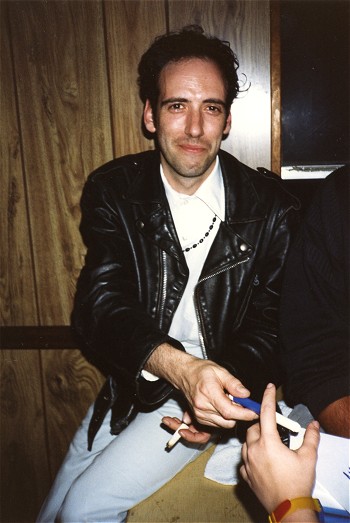
Biography
Mick Jones is a renowned British musician and songwriter, best known for his influential role in the punk rock and post-punk scenes. Born on June 26, 1955, in Wandsworth, London, he emerged in the vibrant music scene of the 1970s. His early career saw him playing with several local bands, honing his craft and developing a distinctive sound that would soon resonate on a larger scale. Jones's formative years included playing with bands like 'The Delinquents' and 'The Clash,' where he began to define his musical identity. His passion for music was clear from an early age, leading him down a path where he would eventually shape the direction of contemporary rock music. Jones gained fame as a founding member of the iconic punk band The Clash, which burst onto the scene in 1976. Their self-titled debut album, released the following year, featured seminal tracks like 'White Riot' and 'Remote Control,' setting the tone for the punk movement. Under Jones's creative leadership, The Clash released several critically acclaimed albums, including 'London Calling,' which is often heralded as one of the greatest albums of all time. The band's fusion of punk rock with reggae, rockabilly, and ska pushed musical boundaries and garnered a diverse fan base. Jones's songwriting, particularly his collaboration with Joe Strummer, produced timeless anthems such as 'Should I Stay or Should I Go' and 'Rock the Casbah.' After The Clash disbanded in 1986, Jones formed the band Big Audio Dynamite, experimenting with various music genres and technology, further establishing his reputation as a forward-thinking artist. Musically, Mick Jones is noted for his eclectic style, blending punk with reggae and rock influences, alongside a strong melodic sensibility. He is also known for his pioneering use of sampling and electronic sounds in the 1980s, particularly with Big Audio Dynamite. Jones often favored specific guitars such as the 1959 Gibson Les Paul Standard, which enabled a diverse range of sounds from gritty punk tones to rich, melodic leads. He has utilized amplifiers like the Marshall JCM800 and specific effects pedals, including the Boss DS-1 Distortion pedal, to shape his iconic sound. His gear choices reflect a deep understanding of tone and texture, making him revered among guitarists and musicians alike. Jones's legacy endures through his contributions to music which continue to influence countless artists across genres. His innovative spirit and refusal to conform to the norms of the music industry set a precedent for future musicians. Currently, Mick Jones remains active in the music scene, participating in various projects and occasionally performing with The Clash alumni or new acts. While he may not be in the spotlight as he once was, his impact on rock music and culture endures, with surveys of influential musicians consistently citing him as a creative force in the evolution of modern music.
Roles
Guitarist, Songwriter, Producer
Band History
The Clash, Big Audio Dynamite, Carbon/Silicon, Dirty Stop Out, The Justice Collective, We Are Family Collective, London SS
Signature Gear
Guitars: 1959 Gibson Les Paul Standard, Fender Telecaster 'Custom'
Amps: Marshall JCM800, Vox AC30
Bandmates & Collaborators
Robbie Takac, Paul McCartney, Terrence Chimes, Paul Simonon, Robbie Wullkotte, robbie-williams, Shane MacGowan, Glenn Tilbrook