Biography
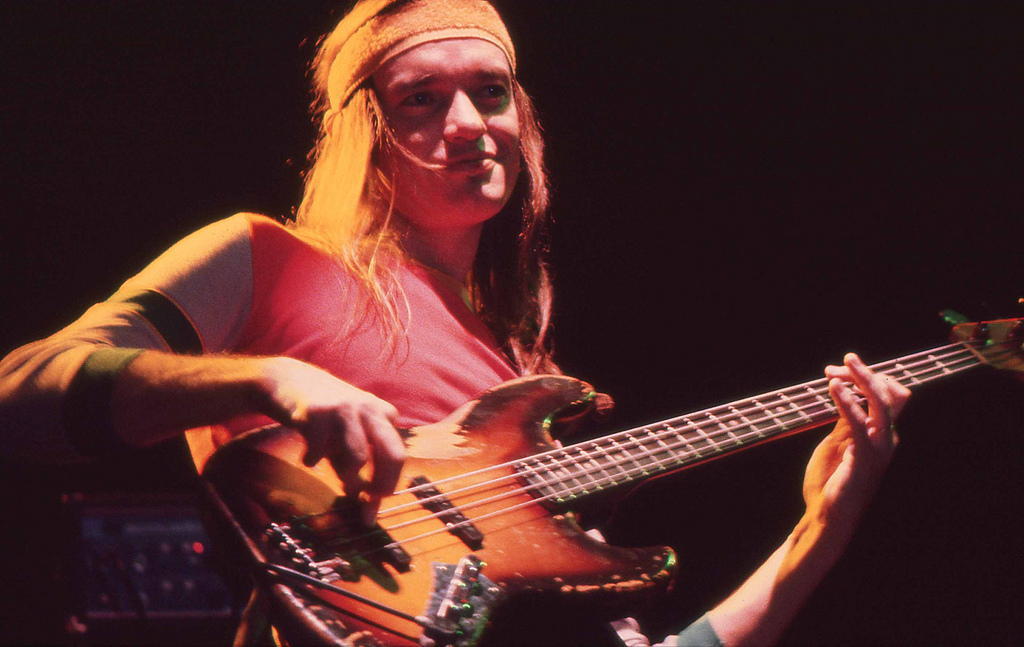
Jaco Pastorius, born on December 1, 1951, in Norristown, Pennsylvania, emerged as one of the most innovative and influential bass players in jazz history. His early exposure to music came from his father, who was a big band musician, which laid a foundation for Jaco's future pursuits. Growing up in a musical family, Jaco began playing the drums at a young age before transitioning to the electric bass in his early teens. This shift not only showcased his versatility but also set the stage for his revolutionary approach to the instrument. His formative years in Florida provided him a vibrant musical scene, and he soon became an integral part of the local jazz and fusion circuit, captivating audiences with his virtuosic playing and unique sound. Jaco's professional career took off in the mid-1970s when he joined Blood, Sweat & Tears from 1975 to 1976. However, it was his time with Weather Report from 1975 to 1982 that solidified his status as a jazz legend. With Weather Report, Jaco was pivotal in creating groundbreaking albums like "Heavy Weather," where his fretless bass lines and melodic improvisation led to chart-topping hits such as "Birdland." His collaboration with the band showcased his ability to fuse jazz with rock, funk, and avant-garde elements. In 1979, he formed Trio of Doom, alongside virtuosos such as John McLaughlin and Tony Williams, further enhancing his reputation as a pioneering force in jazz fusion. Although Jaco founded the Jaco Pastorius Big Band and played with Woodchuck, these projects did not have the enduring impact seen with his previous affiliations. Throughout his career, Jaco Pastorius developed a distinct musical style characterized by his innovative use of harmonics, complex rhythms, and a melodic approach to bass playing that was previously unexplored. He was known for his mastery of the fretless bass, which allowed him to achieve a singing quality in his music. Jaco's signature gear included instruments such as the Fender Jazz Bass and the custom-made Alembic bass, which he used to push the boundaries of what the electric bass could achieve. His amplification choices often leaned towards Acoustic and Ampeg setups, ensuring his sound was both powerful and clear across various performance settings. Additionally, Jaco was known to utilize effects pedals, though he typically preferred to showcase his raw talent rather than rely on technological embellishments. Jaco Pastorius' legacy is etched into the very fabric of jazz and beyond. He has left an indelible mark on bass playing through his groundbreaking techniques, musical compositions, and collaborative works with renowned artists. His influence can be seen in countless bassists across genres, inspiring future generations to explore the full potential of their instruments. Sadly, Jaco's life was marred by struggles with mental health and personal demons, which ultimately led to his untimely death on September 21, 1987. Today, he is celebrated not only as a musical genius but also as a symbol of the artistry and innovation that continue to drive jazz forward.
Roles
Bass Player, Composer, Band Leader
Band History
Weather Report, Blood, Sweat & Tears, Trio of Doom, Woodchuck, Jaco Pastorius Big Band
Signature Gear
Guitars: Alembic Series I, Fender Jazz Bass
Amps: Acoustic 360, Ampeg SVT
Basses: Alembic Elan, Fender Jazz Bass
Strings: La Bella Deep Talkin' Bass Strings
Bandmates & Collaborators
Tony Williams, Joe Zawinul, Wayne Shorter, Randy Brecker, John McLaughlin, Barry Danielian, Airto Moreira, Alphonso Johnson